Behavioral Insights Fueling Adaptive Reward Structures Across Integrated Digital Gaming and Wagering Platforms in Expanding US Markets
Written by Quinn Hughes · Jul 12, 2026

Behavioral Insights Fueling Adaptive Reward Structures Across Integrated Digital Gaming and Wagering Platforms in Expanding US Markets
Behavioral insights drawn from player interaction patterns now drive the design of adaptive reward structures on integrated digital gaming and wagering platforms throughout expanding US markets, where operators combine slots, table games, and sports betting into single account ecosystems. Data collected from millions of sessions reveal preferences for variable reinforcement schedules, and platforms apply these findings to adjust bonuses, loyalty points, and cashback offers in real time. As of July 2026 several states have added online options, increasing the volume of behavioral datasets that feed these systems.
Core Behavioral Principles in Platform Design
Loss aversion and near-miss effects documented in psychological studies shape how platforms time their offers, with algorithms increasing reward frequency after extended losing streaks to maintain engagement. Researchers at institutions such as the University of Nevada, Las Vegas have tracked these patterns across regulated environments, noting that players respond to personalized triggers rather than static promotions. Adaptive structures therefore recalibrate reward tiers daily based on session length, bet size, and game type selection.
Variable ratio schedules borrowed from operant conditioning research appear in the form of surprise multipliers or tiered free spins that unlock only after unpredictable play volumes. Integrated platforms link these mechanics across verticals so that activity in a sportsbook can influence slot reward eligibility, creating cross-product reinforcement loops. Observers note that such integration reduces player churn because rewards feel responsive to individual habits instead of generic marketing calendars.
Data Integration Across Gaming and Wagering Formats
Unified player accounts collect telemetry from digital reels, live dealer tables, and event-based wagering, allowing machine learning models to predict optimal reward moments. When a user shifts from sports betting to slots, the system recognizes the transition and may surface a tailored deposit match drawn from historical response rates. Figures released by state regulators show that states with mature online markets report higher average session values once these adaptive features activate.
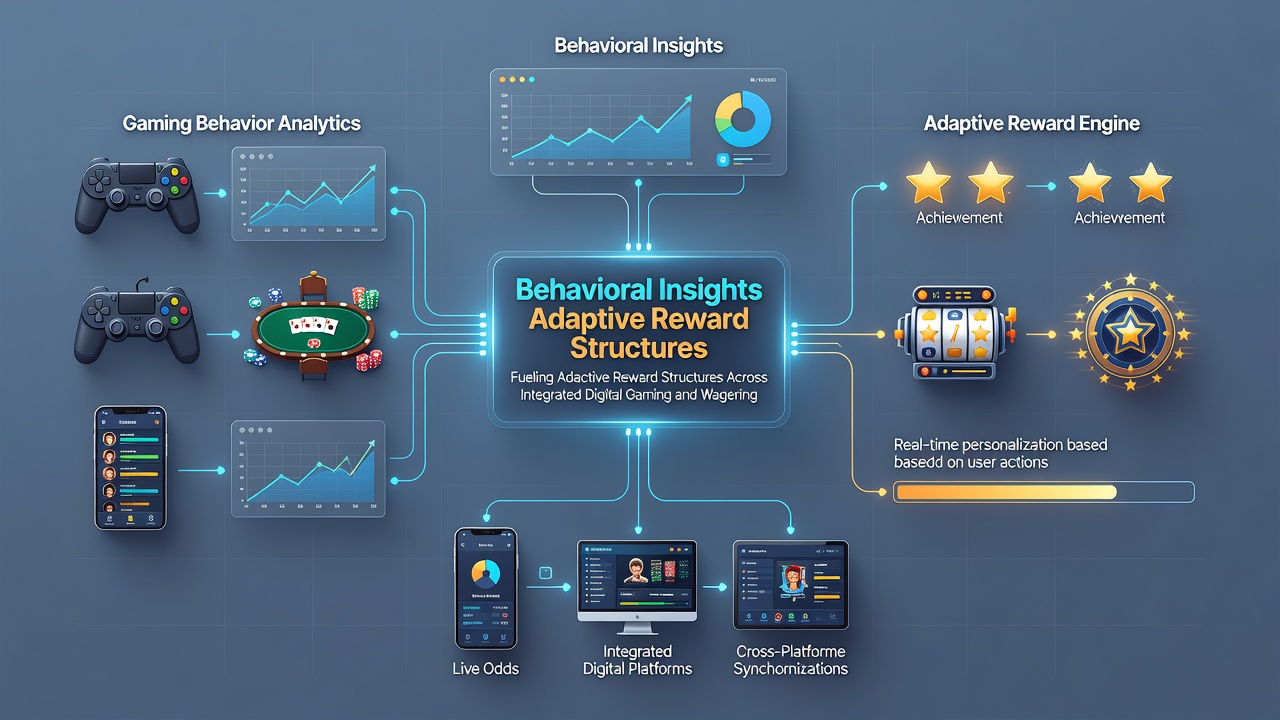
Geolocation protocols ensure that reward adjustments remain compliant while still reflecting behavioral signals gathered during active sessions. Operators in Pennsylvania and New Jersey have documented increased cross-vertical play after implementing unified loyalty currencies that adapt point values according to recent activity clusters. The approach avoids static bonus menus by letting data streams determine which incentive appears next.
Regulatory Context and Market Expansion in 2026
State legislatures continue to authorize online gaming, and each new jurisdiction adds fresh behavioral datasets that refine the underlying models. According to the American Gaming Association, regulated online revenue reached record levels in the first half of 2026, with integrated platforms capturing larger shares than standalone products. Regulatory bodies require transparent reporting of reward algorithms, yet they permit dynamic adjustments provided operators maintain responsible gaming safeguards.
Platforms must also align adaptive rewards with age-verification and self-exclusion tools, so behavioral triggers never override player-set limits. Data from Canadian provincial regulators, which operate similar integrated systems, indicate that combining behavioral personalization with spending caps can stabilize long-term participation rates. US operators reference these international benchmarks when scaling their own frameworks into newly legalized territories.
Implementation Examples Across Platforms
One major operator adjusted its reward engine in early 2026 to grant bonus spins after sports betting losses exceeding a calculated threshold derived from that player's historical variance tolerance. Another platform introduced streak-based multipliers that reset when users move between game categories, encouraging exploration while still honoring established preferences. These changes rely on continuous A/B testing against control groups to verify uplift in retention metrics.
Academic papers published by Australian research centers have examined comparable systems and reported that adaptive rewards tied to behavioral clusters outperform fixed promotions by measurable margins. US platforms incorporate similar segmentation, grouping users by risk profile and preferred session duration before deploying tailored incentives. The result appears in aggregated state revenue reports that show steady month-over-month growth through mid-2026.
Conclusion
Behavioral insights continue to inform the evolution of reward structures on integrated platforms as more US states authorize online gaming and wagering. Real-time data flows enable operators to match incentives to documented player responses, while regulatory oversight maintains boundaries around personalization. The pattern established through July 2026 points toward further refinement of these systems as datasets expand and cross-platform integration deepens.