Encryption Protocols Paving the Way for Unified Player Profiles in Emerging Legal Gambling Zones
Written by Ines Griffin · Aug 16, 2026
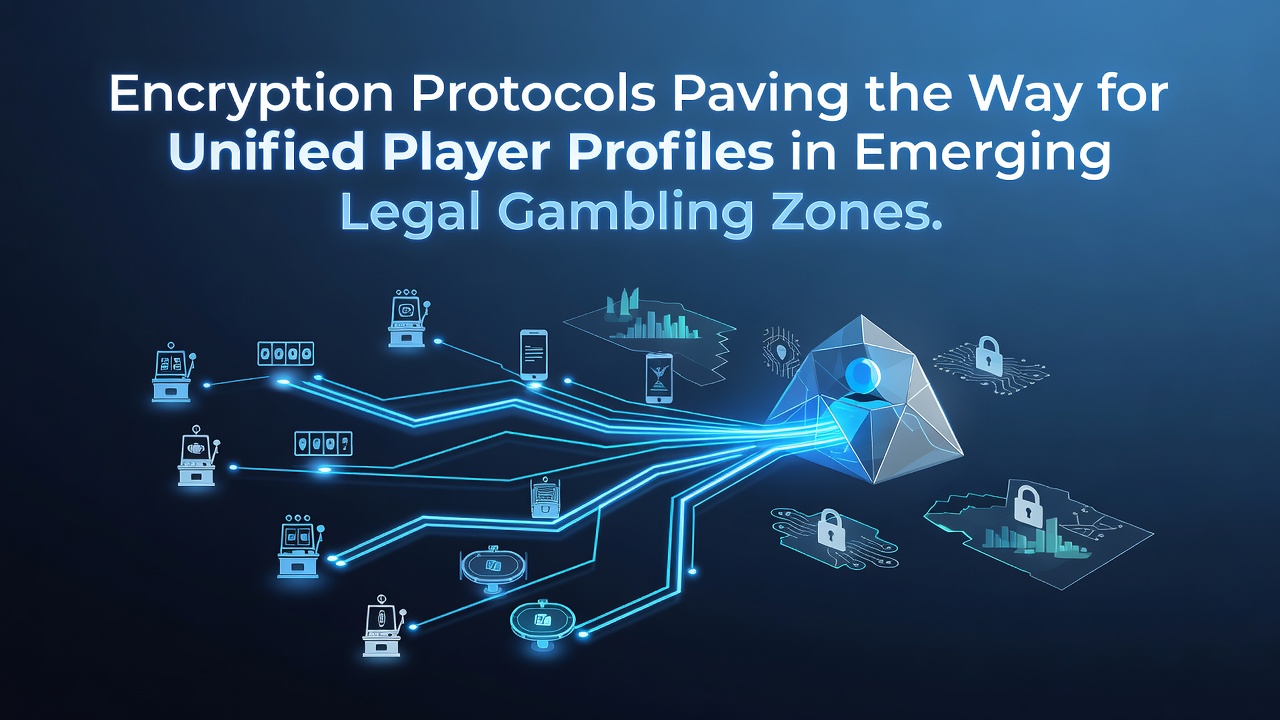
Encryption Protocols Paving the Way for Unified Player Profiles in Emerging Legal Gambling Zones
Encryption standards have become central to the development of unified player profiles as more regions establish regulated gambling frameworks, and operators seek ways to maintain data security while allowing seamless account access across different game types and platforms. In emerging legal zones, regulatory bodies require robust protections for personal and financial information, which has led to widespread adoption of advanced cryptographic methods that support both compliance and interoperability.
Core Technologies Driving Profile Unification
Advanced encryption algorithms such as AES-256 and elliptic curve cryptography form the foundation for protecting player data during transmission and storage, while protocols like TLS 1.3 ensure secure connections between devices and servers. These tools allow operators to create centralized profiles that players can access from slots, table games, and sportsbooks without exposing sensitive details at each step. Researchers at institutions studying digital security have documented how zero-knowledge proofs enable verification of age and account status without revealing underlying personal data, a technique that has gained traction in jurisdictions expanding their online offerings.
Homomorphic encryption represents another layer that permits computations on encrypted information, which means platforms can analyze player activity for responsible gambling measures while the raw data remains protected. According to findings from the National Institute of Standards and Technology, such methods reduce risks associated with data breaches during cross-platform transfers. In August 2026, several new regulatory frameworks in North American and Asian markets began requiring these encryption layers as part of licensing conditions for unified account systems.
Implementation Across Expanding Markets
Emerging legal territories often start with limited licenses that later expand to include multiple game categories, and encryption protocols make it possible to link those categories under one profile. For instance, a player who registers in a newly legalized state can move between virtual card rooms and event-based wagering because encrypted tokens carry verified credentials without repeated identity checks. Studies from academic centers focused on information security show that these approaches lower administrative overhead while meeting data protection mandates from bodies like the Australian Communications and Media Authority and the Canadian Centre for Cyber Security.

Operators in these zones integrate application programming interfaces that rely on encrypted handshakes to share profile elements such as balance history and preference settings. This setup supports portability across different entertainment options, and testing organizations have confirmed that properly implemented encryption maintains integrity during high-volume transactions common in live dealer and tournament environments. Data from industry reports indicate that regions adopting these standards early see faster player adoption rates because accounts feel consistent and protected from the outset.
Regulatory and Technical Standards Alignment
Regulators in expanding markets align their rules with international encryption benchmarks to facilitate cross-border technology transfers and vendor compatibility. This alignment covers requirements for key management, audit trails, and incident response, all of which encryption protocols help satisfy through built-in logging and access controls. Those who have examined deployment cases note that jurisdictions updating their frameworks in mid-2026 emphasized end-to-end encryption for any profile data moving between on-premise systems and cloud services.
Trade associations representing gaming technology suppliers have published guidelines that detail minimum encryption strengths and update cycles, and operators who follow these recommendations report smoother certification processes. Evidence from compliance reviews suggests that unified profiles built on these foundations also support future features such as tokenized payments and loyalty integrations without requiring new security overhauls each time regulations evolve.
Conclusion
Encryption protocols continue to shape how unified player profiles function in newly regulated gambling zones by providing the security backbone that allows data portability without compromising protection standards. As more territories introduce online frameworks throughout 2026 and beyond, the consistent application of these cryptographic methods supports both operator efficiency and regulatory compliance across varied game formats and geographic areas.