State-by-State Licensing Variations Shaping Integrated Gaming Platform Designs in Emerging US Markets
Written by Ines Griffin · Aug 18, 2026
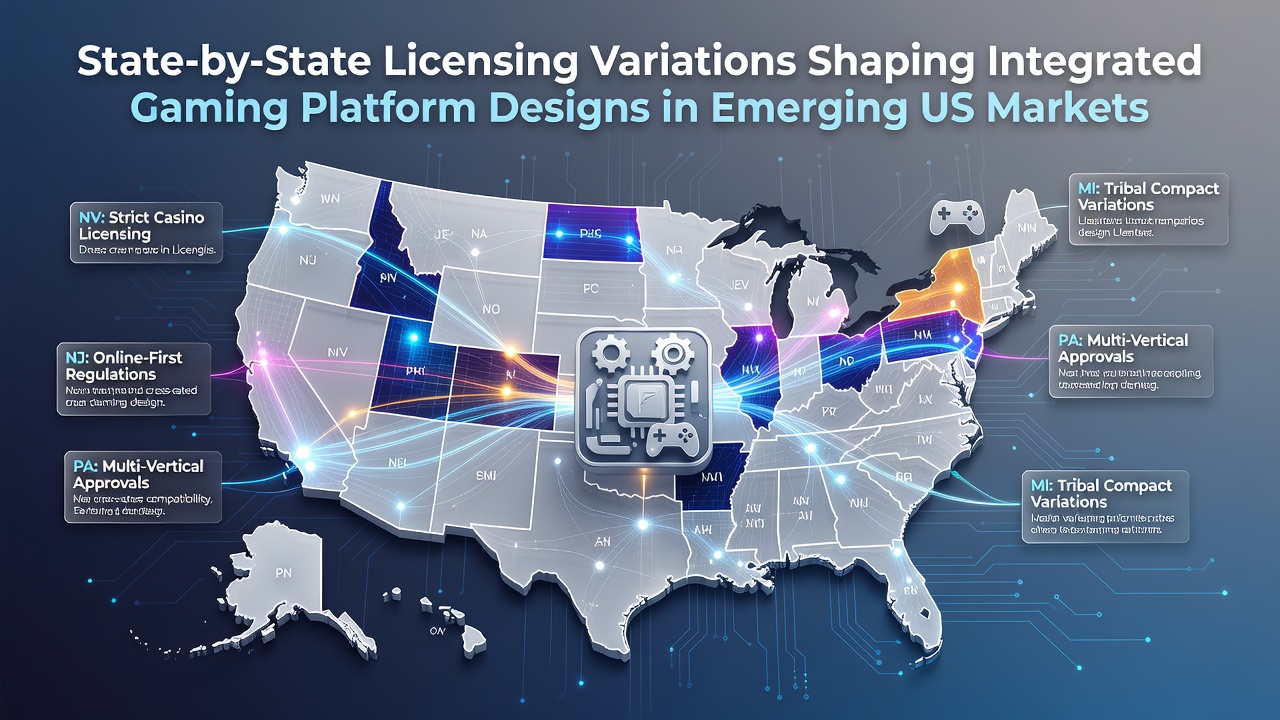
State-by-State Licensing Variations Shaping Integrated Gaming Platform Designs in Emerging US Markets
State regulatory frameworks create distinct requirements that force gaming operators to build flexible platform architectures from the ground up. Emerging markets such as Ohio, Massachusetts, and Maryland each impose unique licensing conditions on game approvals, player verification protocols, and revenue reporting systems, which directly influence how companies design unified interfaces for slots, table games, and sports betting. Data from the American Gaming Association shows that operators spent an average of 18 months adapting core codebases before launching in new jurisdictions during 2025, a timeline driven largely by these differences.
Ohio requires separate licenses for each vertical while mandating real-time data feeds to the Ohio Casino Control Commission, so platforms incorporate modular APIs that isolate sportsbook engines from casino modules without shared databases. Massachusetts, by contrast, bundles licensing under a single interactive gaming permit yet demands stricter geolocation checks every 15 minutes, prompting developers to embed continuous verification scripts that run across all product lines simultaneously. These technical adjustments allow one account to transition between formats while satisfying each state's audit trail standards.
Key Licensing Differences Across Emerging Jurisdictions
Tax structures vary sharply and shape platform economics in measurable ways. Ohio collects 33 percent on online casino gross gaming revenue plus an additional 20 percent on sports betting handle above certain thresholds, which encourages operators to deploy dynamic bonus engines that adjust promotional offers based on real-time tax exposure calculations. Maryland applies a flat 15 percent rate across verticals but requires detailed segmentation of player deposits by game type, leading to ledger systems that tag every transaction at the moment of placement rather than at settlement.
Player account portability rules add another layer of complexity. Some states permit full wallet sharing between casino and sports products under one license, whereas others insist on segregated balances that reset daily. Platform engineers respond by coding conditional logic that reads the active jurisdiction at login and applies the correct separation rules without user intervention. Research from the University of Nevada, Las Vegas International Gaming Institute indicates that states adopting unified wallet standards saw 27 percent higher session completion rates in the first year after legalization compared with states enforcing separation.
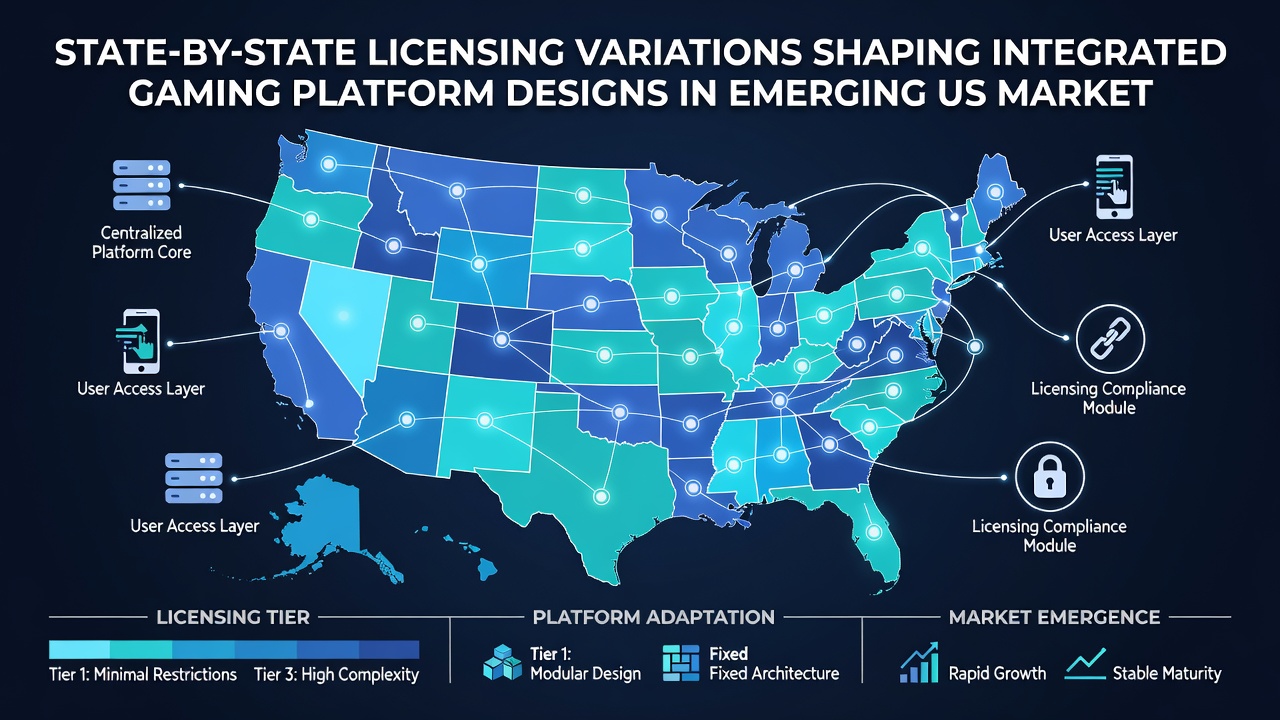
Platform Architecture Adaptations in Practice
Geolocation and identity verification tools sit at the center of these adaptations. Emerging markets often reference federal guidelines yet layer state-specific overrides, so vendors maintain multiple certification paths within a single codebase. One common approach involves containerized microservices that activate only the compliance checks required by the detected location, reducing latency while meeting each regulator's audit frequency.
Bonus and promotion engines also diverge. Pennsylvania and New Jersey, though more established, set precedents that newer states study closely, yet Massachusetts and Ohio have introduced their own restrictions on cross-vertical bonus triggering. Designers therefore program rule engines that evaluate eligibility against a jurisdiction matrix updated monthly, ensuring that a free spin earned on slots cannot automatically convert into a sports wager unless the state explicitly allows it.
August 2026 brought fresh filings in two additional states considering legalization, each publishing draft rules that emphasize open API standards for third-party game providers. These proposals signal a move toward standardized data schemas that could reduce custom development time in future markets, though early drafts still retain unique reporting fields for responsible gaming metrics.
Case Examples of Design Responses
Take one operator that launched in Ohio during late 2025 and then expanded into Maryland six months later. The team reused the same player database but swapped out the tax calculation layer and inserted additional geofencing checkpoints, completing the Maryland integration in nine weeks rather than the six months required for the initial Ohio build. Observers note that pre-built compliance templates now circulate among vendors, allowing smaller studios to license modular components instead of developing every check from scratch.
Another example appears in Massachusetts, where regulators require quarterly penetration testing reports that cover the entire integrated stack. Companies responded by embedding automated security scanning within their continuous integration pipelines, a practice that originated in financial technology but now appears routinely in gaming submissions.
Conclusion
State-by-state licensing variations continue to dictate the technical boundaries within which integrated gaming platforms operate. As more jurisdictions finalize rules, operators refine modular architectures that isolate compliance logic from core gameplay features, enabling faster entry into new markets while preserving a consistent user experience. Figures released by state gaming agencies through mid-2026 show steady growth in licensed operators, underscoring that successful platform design hinges on precise alignment with each locale's distinct regulatory demands.